
Make Notifications Work For You Without Distractions
Notifications should keep you in the loop, not derail your focus. Let’s turn them into helpful cues instead of annoying interruptions.
Keep Work Chats Visible But Private
You don’t have to choose between staying updated and keeping chats private. These steps balance both:
Hide message previews:
Go to WhatsApp Web’s Settings → Notifications. Under “Message Notifications,” find “Show previews” and select “Never.” This way, notifications only show the contact name, not the actual message text. I tested this last week during a team meeting—my laptop displayed “Client X” instead of their confidential pricing query, so no one could peek at sensitive details.
Lock screen quickly:
Head to Settings → Privacy → Screen Lock. Turn it on and pick a 1-minute auto-lock timer. If you step away from your desk briefly, the app locks automatically, hiding all chats until you scan the QR code again. My boss walked by my laptop while I was grabbing coffee last week, and he couldn’t see anything—perfect for busy offices.
Use subtle sounds:
In Notifications settings, switch the message tone to “Breeze” (a soft ping) instead of the loud default. This lets you hear urgent messages without disturbing coworkers. I made this change last month, and my desk neighbor stopped complaining about constant beeps during focus time.
When you first set up WhatsApp web on your laptop, default settings are often too intrusive—so these tweaks are a must-do right after logging in.
Mute Non-Urgent Notifications Smartly
Not all chats need your immediate attention. Let’s silence the noise without missing important updates:
Mute groups by priority:
Open a non-urgent group chat → click the three dots → select Mute. Choose 8 hours (perfect for workdays) to avoid meme or spam alerts during meetings. I mute my team’s casual group every morning and unmute it after 5 PM—no more distractions while drafting proposals.
Schedule OS-level DND:
On Windows, go to Settings → System → Focus Assist and enable it from 9 AM to 5 PM. This hides all non-urgent notifications (including WhatsApp Web) but keeps calls visible. On Mac, use “Do Not Disturb” in System Preferences → Notifications. I set this up last week, and it’s changed my work-life balance—no late-night pings while I’m watching a movie.
Filter muted chat alerts:
In WhatsApp Web’s Notifications settings, uncheck “Show notifications for muted chats.” This ensures even forgotten muted groups won’t pop up. I did this after a spam group kept sending alerts I’d missed—now only active, important chats notify me.
Shield Your Private Chats From Unwanted Eyes
Privacy isn’t just about notifications—it’s about keeping your chats safe from snoops. Let’s lock down your account:
Prevent Screen Snoops Instantly
Even a quick glance can reveal private info. These steps keep your chats hidden when you’re not around:
Enable screen lock:
Go to Settings → Privacy → Screen Lock. Turn it on and choose “Immediately” if you work in a busy space. When locked, your chat list disappears, and you need your phone’s passcode to unlock. I use this for client chats—every time I finish a call, I lock the app manually to be safe.
Use incognito mode wisely:
Open WhatsApp Web in an incognito browser tab. Close the tab when you’re done, and no one can reopen it without scanning the QR code again. I use incognito for sensitive client conversations—no traces left on my laptop’s browsing history.
Hide last seen time:
Head to Privacy → Last Seen. Select “My contacts except…” and add colleagues you don’t work with directly. This stops random people from seeing when you’re active. A former client kept messaging me at odd hours until I did this—now they send emails instead, which is easier to manage.
Control Who Sees Your Online Status
You don’t have to broadcast your availability 24/
Adjust online visibility:
In Privacy settings, go to “Online” and choose “My contacts.” This lets friends and clients see you online during work hours, but not spam contacts. I keep this on for work days—clients know I’m available, but random strangers can’t pester me.
Block unwanted contacts:
Open a spam chat → three dots → Block. This stops them from seeing your status, sending messages, or calling you. Last month, a fake deal contact kept messaging me—I blocked them, and now I don’t have to worry about their intrusions.
Turn off read receipts:
Go to Privacy → Read Receipts and uncheck the box. This lets you read non-urgent messages without letting others know you’ve seen them. I use this for casual chats—no one thinks I’m ignoring them if I can’t reply right away.
Got Questions About WhatsApp Web Settings? I’ve Got Answers
Why do notifications still pop up after muting on my phone?
WhatsApp Web has independent settings—muting on your phone doesn’t sync to the web app. To fix this, mute the chat directly on the web: open the chat → three dots → Mute. Also, uncheck “Show notifications for muted chats” in Notifications settings. I learned this the hard way when my family’s vacation group kept alerting me on my laptop (even after muting it on my phone). Another tip: log out and back in if settings don’t sync—this resets the app and fixes glitches.
Can I use WhatsApp Web without my phone connected?
Short answer: no—WhatsApp Web relies on your phone to sync messages and maintain security. But if you connect your phone first and keep the web tab open, it stays logged in for a few hours offline (like during a meeting with no signal). Closing the tab or putting your laptop to sleep will require reconnection. This is a privacy feature—end-to-end encryption ties the web app to your phone, so only you can access chats. I think it’s worth the minor inconvenience; last year, a friend lost his laptop, and since WhatsApp Web was logged out (phone was off), no one accessed his chats.
How do I stop unauthorized logins to my account?
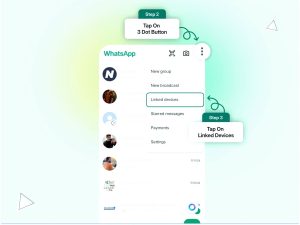
First, log out of WhatsApp Web every time you’re done (three dots → Log out). Second, enable two-step verification on your phone: WhatsApp → Settings → Account → Two-step verification → Enable. This adds a 6-digit code to logins, so hackers can’t access your account even if they have your phone. Third, check linked devices regularly: phone → Settings → Linked Devices → log out of unknown sessions. I do this every Sunday—last month, I found a session from a city I’d never visited and logged it out immediately. Also, avoid scanning unknown QR codes—hackers use fake codes to steal access. These steps have kept my account safe for years, so I highly recommend them.
Alright, those are all the tricks I have for now. Have you tried any of these settings? Did they work for you? Or do you have another trick I should know about? Drop a comment below—I’d love to hear from you!