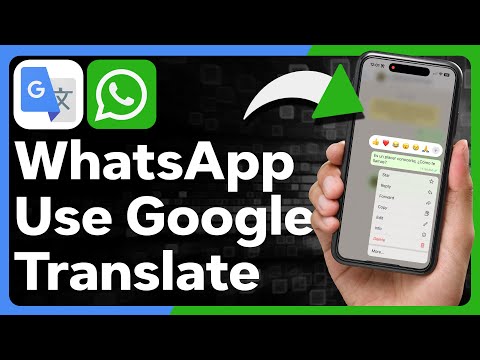

Translate WhatsApp Web Messages Without Leaving the App
The fastest way to translate messages is to do it without switching tabs. Here are two reliable methods I use daily:
Use Right-Click Translation on WhatsApp Web
Enable In-Line Translation via Browser Extensions
Quick Translation for WhatsApp Web Chats Using Browser Tools
If you don’t want to use extensions, your browser’s built-in tools work great. Here’s how:
Use Chrome’s Built-in Translate Feature
Use Firefox’s Language Pack Add-ons
Common WhatsApp Web Translation Questions Answered
Why isn’t my browser translating WhatsApp Web messages correctly?
There are several reasons for this. First, your browser may lack the necessary language pack. For example, if you’re trying to translate Arabic but don’t have the Arabic pack installed, the browser can’t detect the text. Add the pack via your browser’s language settings to fix this. Second, mixed-language messages (like English and Spanish in one sentence) confuse browsers—you’ll need to translate specific parts manually. Third, corrupted cache: clear it to fix minor glitches. I once had Chrome translate Spanish to French—turns out I’d accidentally set Italian as the target language for Spanish; fixing that setting solved the issue instantly. Also, images with text can’t be translated by browsers—use Google Lens to extract the text first before translating.
Are WhatsApp Web translation extensions safe to use?
Most reputable extensions are safe if you choose wisely. Look for extensions with 4.5+ star ratings and a large number of downloads—this indicates that many users have tested them and found them reliable. Check the permissions the extension asks for: a good translation extension should only need access to WhatsApp Web’s content (to read and translate messages). Avoid extensions that ask for access to all websites or your personal data—these could be risky. Read user reviews to spot any red flags, like comments about the extension collecting data or causing issues. Keep your extensions updated—developers often release security patches to fix vulnerabilities. I’ve been using translation extensions for WhatsApp Web for over 3 years, and I’ve never had a security issue as long as I followed these rules.
Can I auto-translate all WhatsApp Web messages without extensions?
Yes, you can use your browser’s built-in auto-translation features. For example, in Chrome, go to Settings → Languages → toggle on “Offer to translate pages that aren’t in a language I read”. This will make Chrome automatically offer to translate any WhatsApp Web message in a foreign language. However, this feature isn’t as customizable as extensions—you can’t set it to auto-translate only specific languages or group chats. If you need more control over which messages get translated, extensions are the better option. Another alternative is to use system-wide translation tools (like Windows’ built-in translation or Mac’s Translate feature) which work across all apps, including WhatsApp Web. These tools are safe and reliable, but they also lack the customization of extensions. I use the built-in Chrome translation for occasional messages, but for my daily client chats, I prefer extensions because they let me auto-translate specific languages and groups. This way, I don’t have to waste time translating every single message manually.