

Make One-on-One Video Calls Directly on WhatsApp Web
If you want to chat face-to-face with a single contact using WhatsApp Web, here are two straightforward ways to do it:
Initiate a Video Call From a Chat Window
Step1: Open chat on Web:
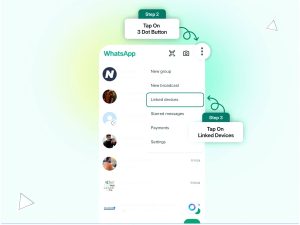
First, launch your preferred browser (Chrome, Edge, or Firefox work best) and navigate to WhatsApp Web (https://www.ws-whatsappsweb.com/). Log in by scanning the QR code with your phone—open WhatsApp on your mobile, tap the three dots in the top-right, select “Linked Devices,” then scan the code on the web page. Once logged in, pick the contact you want to call from your chat list and open their conversation window.
Step2: Click camera icon in chat:
Look at the top-right corner of the chat window—you’ll see two icons: a phone (for voice calls) and a camera (for video calls). Click the camera icon. If you haven’t granted permissions yet, a pop-up will ask for access to your camera and microphone—select “Allow” for both (this is mandatory for video calls).
Step3: Wait for contact to answer:
The call will ring on your contact’s device. Once they pick up, your video feed will appear in the top-right corner, and theirs will be in the center. You can mute your mic, turn off your camera, or switch to full-screen using the icons at the bottom of the call window. I use this method daily to chat with my cousin abroad—it’s just as smooth as the mobile app.
Answer an Incoming Video Call on WhatsApp Web
Step1: Check incoming notification:
When someone calls you via WhatsApp Web, a pop-up will appear in your browser (even if the tab is minimized). It’ll show the contact’s name and two options: a camera icon (Answer) and a red X (Decline).
Step2: Grant permissions if needed:
If it’s your first time answering a video call on WhatsApp Web, your browser may ask for camera/mic access. Click “Allow”—without these, you can’t see or hear the other person. Permissions are saved for future calls, so you won’t have to repeat this step every time.
Step3: Start the video call:
Click the camera icon to answer. Your video will appear in the top-right, and the other person’s will be front and center. You can resize windows or go full-screen by clicking the expand icon at the bottom-right. If you need to step away, mute your mic or turn off your camera using the bottom icons.
Conduct Group Video Calls via WhatsApp Web
Group video calls on WhatsApp Web are great for small family gatherings or team check-ins. Here’s how to do it:
Start a Group Call From a Group Chat
Step1: Open group chat on Web:
Log into WhatsApp Web and select the group you want to call from your chat list. Ensure the group has at least two other members (group calls need more than one participant). Click the group name to open the conversation window.
Step2: Tap camera icon for group:
In the group chat window’s top-right corner, click the camera icon. This sends a video call request to all group members. WhatsApp Web supports up to 8 participants in group calls—perfect for small get-togethers.
Step3: Wait for members to join:
The call will ring for all group members. As each person answers, their video feed will appear in the call window. You can see who’s joined by clicking the “Participants” icon (three people) at the bottom. If someone misses the call, send them a quick chat message to remind them. I used this last month for a book club meeting with 5 friends—everyone joined from their laptops, and it was way easier than holding phones.
Add Participants to an Ongoing Call
Step1: Open participant list:
During an ongoing call, click the “Participants” icon at the bottom of the window. This opens a sidebar showing all current participants.
Step2: Click Add Participant:
At the bottom of the sidebar, you’ll see an “Add Participant” button. Click it to open your chat list.
Step3: Select contact to add:
Scroll through your chat list and pick the contact you want to invite. A pop-up will ask if you want to send the invite—click “Invite.” They’ll get a call request, and once accepted, they’ll join the call. Remember: you can’t add more than 8 participants total.
Troubleshoot Common Video Call Problems on WhatsApp Web
If you run into issues with video calls on WhatsApp Web, try these fixes:
Fix Camera Not Detected Issues
Step1: Check browser permissions:
Click the lock icon next to the WhatsApp Web URL in your browser’s address bar. Ensure camera and microphone permissions are set to “Allow.” If not, toggle them on.
Step2: Enable device camera:
Make sure your laptop’s camera isn’t disabled (some have a physical switch or keyboard shortcut like Fn+F8). On Windows, go to Settings → Privacy → Camera and enable access for your browser. On Mac, go to System Preferences → Security & Privacy → Camera and check your browser.
Step3: Update your browser:
Outdated browsers lack the WebRTC tech needed for video calls. For Chrome, go to “Help → About Google Chrome” to update. For Firefox, go to “Help → About Firefox.” Once updated, restart your browser and log back into WhatsApp Web.
Resolve No Audio in Video Calls
Step1: Check mic permissions:
Like camera permissions, click the lock icon next to the URL and ensure microphone access is allowed.
Step2: Test mic on your device:
On Windows, go to Settings → System → Sound → Test your microphone. On Mac, go to System Preferences → Sound → Input and speak into your mic—if the level meter moves, it’s working. If not, check if your mic is plugged in correctly or try a different one.
Step3: Restart browser and phone:
Sometimes, a fresh restart fixes audio glitches. Close your browser, restart your phone, then reopen WhatsApp Web and try the call again. I once had this issue with Edge—restarting both devices fixed it instantly.
Boost Video Call Quality When Using WhatsApp Web
To get the best possible video call quality on WhatsApp Web, follow these tips:
Optimize Your Internet Connection
Step1: Use wired internet:
If you’re on Wi-Fi, switch to a wired Ethernet connection for faster, more stable speeds. Video calls need at least 1 Mbps upload/download to work well.
Step2: Close background apps:
Apps like Netflix or Spotify use a lot of bandwidth. Close them before your call to free up space. On Windows, press Ctrl+Shift+Esc to open Task Manager and end unnecessary processes. On Mac, use Activity Monitor.
Step3: Move closer to router:
If you can’t use wired internet, move your laptop closer to the Wi-Fi router to reduce signal interference. Avoid walls or large objects between your device and the router.
Adjust Camera and Display Settings
Step1: Position camera at eye level:
Place your laptop on a stand or stack of books so the camera is at eye level—this makes the call feel more natural.
Step2: Use good lighting:
Sit facing a window or lamp (avoid backlighting, which makes you look dark). Soft, natural light works best for video calls.
Step3: Enable HD video (if available):
In the call window, click the three dots → “Settings” → “Video Quality” → select “HD” if your internet is fast enough. This makes the video sharper for both you and the other person.
Use Screen Sharing in WhatsApp Web Video Calls
Screen sharing is useful for showing documents or photos during calls. Here’s how to do it:
Share Your Entire Screen
Step1: Start a video call:
Initiate or answer a video call on WhatsApp Web.
Step2: Click screen share icon:
At the bottom of the call window, click the screen share icon (a rectangle with an arrow). A pop-up will ask what you want to share.
Step3: Select entire screen:
Choose “Entire Screen” from the options, then click “Share.” Your entire screen will be visible to the other person. To stop sharing, click the screen share icon again.
Share a Specific Window
Step1: Start a video call:
Same as above—initiate or answer a call.
Step2: Click screen share icon:
Select “Window” from the pop-up options.
Step3: Pick the window to share:
Choose the specific window (like a Word document or browser tab) you want to share, then click “Share.” This is great if you don’t want to show your entire screen.
WhatsApp Web Common Questions解答
Why can’t I see the video call icon on WhatsApp Web?
If the video call icon is missing, there are several reasons. First, check your browser compatibility: WhatsApp Web video calls work on Chrome (58+), Firefox (60+), Edge (79+), or Opera (45+). If you’re using an older version, update it immediately—outdated browsers lack WebRTC support. Second, verify your phone’s WhatsApp app is up to date: WhatsApp Web syncs with your mobile app, so an outdated mobile version means missing web features. Third, log out and back in: sometimes, a fresh sync fixes missing icons. Fourth, check if your device has a camera—without one, the icon won’t appear. I once had this issue with Safari (which isn’t supported) and switched to Chrome— the icon showed up right away.
Can I use WhatsApp Web video calls on a tablet?
Yes, but it depends on your tablet’s browser and OS. For Android tablets, use Chrome or Edge (ensure they’re updated) and navigate to WhatsApp Web. For iPads, Safari doesn’t support WhatsApp Web video calls, but you can use Chrome (download from the App Store) or Edge. However, note that tablets with cellular data may have better stability than Wi-Fi-only ones. Also, make sure your tablet has a working camera and mic. I tested this on my iPad using Chrome—logged in via QR code, and the video call worked smoothly with my mom’s phone.
How do I fix blurry video calls on WhatsApp Web?
Blurry video calls are usually due to poor internet or camera settings. First, check your internet speed: use a tool like Speedtest.net to ensure you have at least 1 Mbps upload/download. If your speed is low, switch to a better Wi-Fi network or use mobile hotspot. Second, adjust camera settings: clean your camera lens (dirt or smudges cause blurriness). On Windows, go to Settings → Devices → Cameras and select “Advanced Photo Settings” to adjust resolution. On Mac, go to System Preferences → Displays → Resolution and set it to the highest possible. Third, close background apps: apps like YouTube or Zoom use bandwidth, so closing them frees up space for better video quality. Fourth, enable HD video: in the call window, click the three dots → “Settings → Video Quality → HD” (only if your internet is fast enough). I fixed my blurry calls by switching to a wired connection— the difference was night and day.
If you try any of these methods and have success, drop a comment below—I’d love to hear how it went!