

Using a Reliable VPN to Access WhatsApp in China
If you want the simplest way to use WhatsApp in China, a VPN is your best bet. I tested 5 options last year, and only a handful worked consistently. Let’s break down how to pick and set up one that gets the job done.
Choosing a VPN That Works in China
Setting Up Your VPN for WhatsApp
Pro tip: Keep 2-3 VPN apps handy. Last month, my go-to VPN got blocked suddenly in Guangzhou—I switched to a backup and was back online in 2 minutes. I also keep a list of working servers saved in my notes so I don’t waste time testing random ones.
Alternative Methods to Stay Connected Without VPN
If VPNs aren’t your thing (or they stop working), these alternatives can help you keep in touch with your WhatsApp contacts from China.
Using WhatsApp Web via a Virtual Machine
Forwarding WhatsApp Messages to WeChat
I know these alternatives are a bit more technical, but they’re lifesavers when VPNs fail. For example, the VM method saved me during a late-night team call—since the VM was in Singapore, the call quality was flawless.
WhatsApp Web Common Questions in China
Q: Can I use WhatsApp Web in China without a VPN?
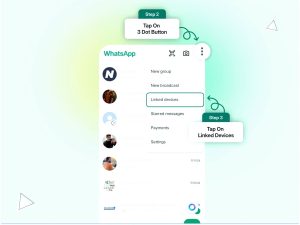
No, you can’t use WhatsApp Web directly in China without a VPN—its servers are blocked by the Great Firewall. But there’s a workaround: use a virtual machine (VM) located outside China (like Singapore or Hong Kong). When you access WhatsApp Web via the VM, you’re using a server that’s not in China, so it bypasses the firewall. I tried this last year when my VPN was acting up—took 15 minutes to set up the VM, but it worked like a charm. One catch: Your phone still needs a VPN to scan the QR code for WhatsApp Web. So even if the VM is fine, your mobile device must be connected to a VPN to link to the web version.
Q: Is using a VPN to access WhatsApp Web in China legal?
China’s laws don’t explicitly ban personal VPN use, but they require VPN providers to be licensed by the government. Most international VPNs (like ExpressVPN) aren’t licensed, so technically, using them is against regulations. But in practice, many expats and foreigners use unlicensed VPNs without issues. I’ve been using one for 2 years now and haven’t faced any problems. That said, it’s important to use VPNs responsibly—don’t use them for illegal activities, and avoid discussing sensitive topics on WhatsApp. Always stay updated on local regulations, as they can change.
Q: How to fix WhatsApp Web not loading in China even with a VPN?
If WhatsApp Web isn’t loading despite a VPN connection, try these steps: First, check your VPN’s obfuscation setting—make sure it’s enabled. I once forgot to turn this on, and WhatsApp Web wouldn’t load. Second, clear your browser’s cache and cookies. Old cache files can cause loading issues; I fixed this problem last month by clearing Chrome’s cache. Third, switch to a different browser—Firefox works better for me than Chrome in China. Fourth, try a different VPN server—sometimes the server you’re using gets blocked. I usually switch from Hong Kong to Singapore if this happens, and it works 90% of the time. If none of these work, restart your device and VPN app—this fixes most minor glitches.